
What Another Season of Ignoring This Actually Costs You
A garage door that's even slightly out of balance doesn't announce itself with a loud bang. It shows up as an opener that runs a little louder, a little slower, or strains at the halfway point of the door's travel. Homeowners tend to shrug it off because the door still opens. But every cycle on an unbalanced door puts extra load on the opener's motor, gears, and drive belt or chain — and that wear compounds. Carry that into an Avon Lake winter, when cold temperatures already stiffen lubricants and make steel springs and rollers work harder, and you've got a setup for an opener failure on the coldest morning of the year, or a door that won't budge when ice has the panels gripped tight. Replacing a garage door opener typically runs $200 to $600 for the unit alone, more with installation, which is a cost worth avoiding when a 15-minute test can catch the problem now.
Why Balance Matters More Than People Think
A properly balanced garage door is counterweighted by its springs so that the door's own weight is almost entirely offset. The opener's motor is only supposed to provide a small push to get it moving — not lift the door's full weight on every cycle. When springs weaken or stretch (which happens gradually, and faster with the temperature swings typical of a Lorain County fall and winter), the opener starts doing the spring's job. That's not what it's built for, and it fails sooner because of it.
Tools You'll Need
- Nothing more than your hands, in most cases
- A step stool, if your manual release cord is high
- A helper, optional, for holding the door steady during the test
- A flashlight, to check spring and cable condition afterward
Step-by-Step: Testing Your Garage Door's Balance
- Close the door fully. Start with the door all the way down so you have a clean baseline.
- Disconnect the opener. Pull the manual release cord (usually a red handle hanging from the trolley) so the door is no longer connected to the opener arm. This step matters — testing balance with the opener still engaged will give you a false reading.
- Lift the door by hand, slowly, to about waist height. Use smooth, even force. Don't yank it.
- Let go and watch what happens. A well-balanced door will stay roughly in place, maybe drifting down an inch or two. It should not slam down and it should not shoot upward.
- Repeat at the halfway point and near full open. Balance issues often show up more at certain points in the travel, especially on doors with extension springs rather than torsion springs.
- Reconnect the opener by pulling the release cord again (or following your opener's reconnect procedure) once you're done testing.
- Write down what you noticed. Did it drop fast? Feel heavier on one side? Catch or stick at a certain height? This detail helps a technician diagnose the issue faster if you do need to call one.
What an Unbalanced Door Does to the Opener
If the door drops on its own or feels heavy to lift, the springs are no longer carrying their share of the load — and the opener is compensating every single time it cycles. Over weeks and months, that shows up as:
- A motor that runs hotter and louder than it used to
- Gear sets that wear down and strip prematurely, especially in chain-drive and belt-drive openers
- A circuit board that works overtime to manage current draw, shortening its lifespan
- Increased chance of the opener's safety reversal system misfiring, since it's reading resistance that shouldn't be there
In practical terms, an opener rated to last 10 to 15 years under normal conditions can burn out in a fraction of that time when it's fighting an unbalanced door on every cycle, particularly through a Northeast Ohio winter when cold makes everything stiffer and the opener has to work harder just to get moving.
What's Safe for a Homeowner to Do
The balance test above is homeowner-safe. So is a visual check of the springs and cables with a flashlight — look for visible gaps in a torsion spring coil, fraying on the lift cables, or rust buildup, which is common here given road salt tracked into garages all winter. If something looks off, note it, but don't touch it.
What Needs a Technician
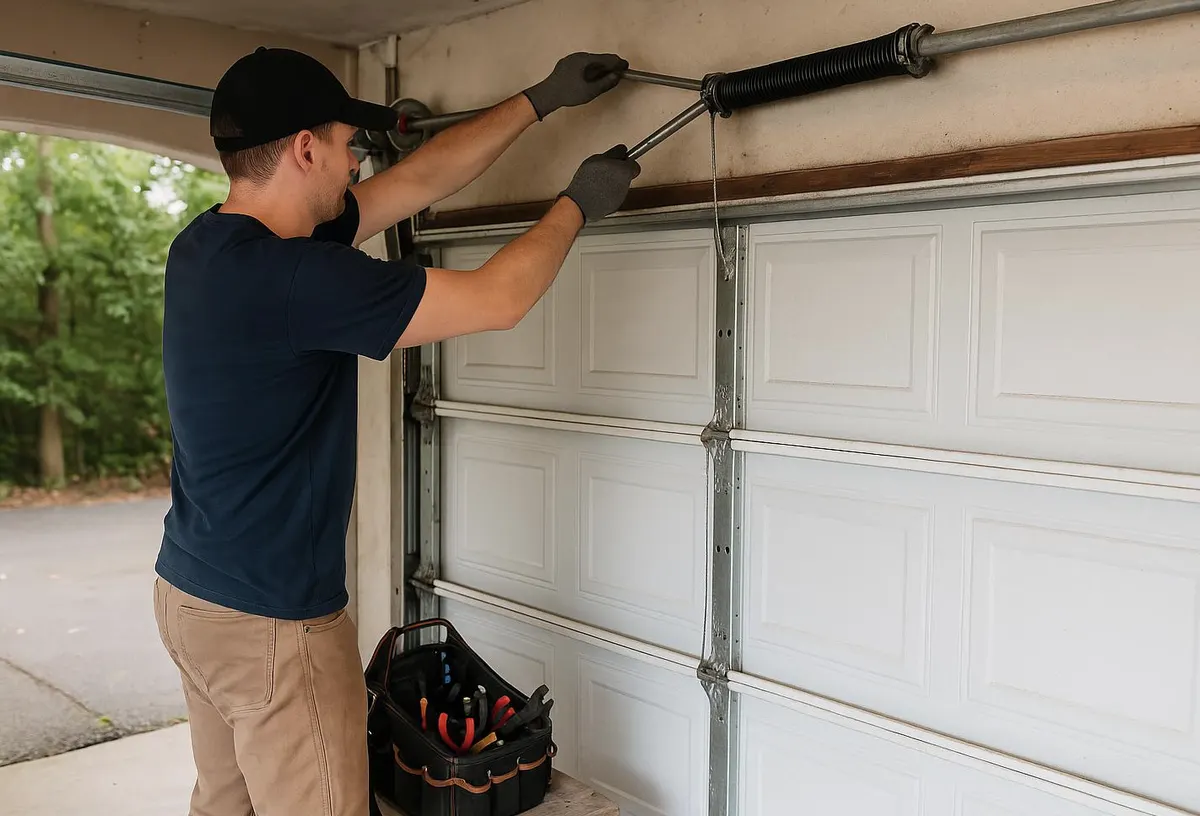
Garage door springs are under extreme tension and adjusting, tightening, or replacing them is not a homeowner task — it's one of the more common causes of serious garage door injuries nationwide. If your test shows the door is unbalanced, the fix is a spring adjustment or replacement, and that work needs a trained technician with the right bars and clamps. The same goes for cable replacement, track realignment, and any opener gear repair tied to spring strain.
When to Call Avon Lake Garage Door
If your door fails the balance test, feels heavier than it used to, or your opener has been straining audibly, it's worth getting ahead of it before winter weather makes everything less forgiving. Avon Lake Garage Door handles spring replacement and garage door opener repair across Avon Lake and the surrounding Lorain County area, and can check spring tension, cable condition, and opener wear in the same visit so you're not guessing which part failed first.
If your door isn't balancing right or the opener's been working too hard, call Avon Lake Garage Door for same-day garage door service in Avon Lake, OH before the cold sets in.